Research연구 분야

Electrode materials, from the mine to the module광물에서 모듈까지, 전극 소재의 전 과정

01 · Sodium-ion01 · 소듐이온전지

Hard-carbon anodes for Na-ion batteries소듐이온전지용 하드카본 음극

  • High-energy spherical hard carbon (HC)고에너지 구형 하드카본(HC)
  • High-power, composite-like HCs고출력 복합형 하드카본

Hard carbon is the anode that makes sodium-ion batteries practical, but its performance is dictated by feedstock and heat treatment far more than by post-processing. We develop hard carbons from inexpensive precursors using scalable, simple synthesis and control the solvent- versus anion-derived SEI to push both capacity and rate.하드카본은 소듐이온전지를 실용화하는 핵심 음극이지만, 그 성능은 후처리보다 원료와 열처리 조건에 훨씬 크게 좌우됩니다. 저가 전구체에서 단순하고 확장 가능한 합성으로 하드카본을 만들고, 용매 유래 SEI와 음이온 유래 SEI를 제어해 용량과 출력을 함께 끌어올립니다.

  • High-performance HC from low-cost feedstock저가 원료 기반 고성능 하드카본
  • Scalable and simple synthetic routes확장 가능하고 단순한 합성 경로
  • Composite-like HCs for extremely low-temperature SIB operation극저온 소듐이온전지 구동을 위한 복합형 하드카본
Na-ionHard carbonSEI designLow temperature
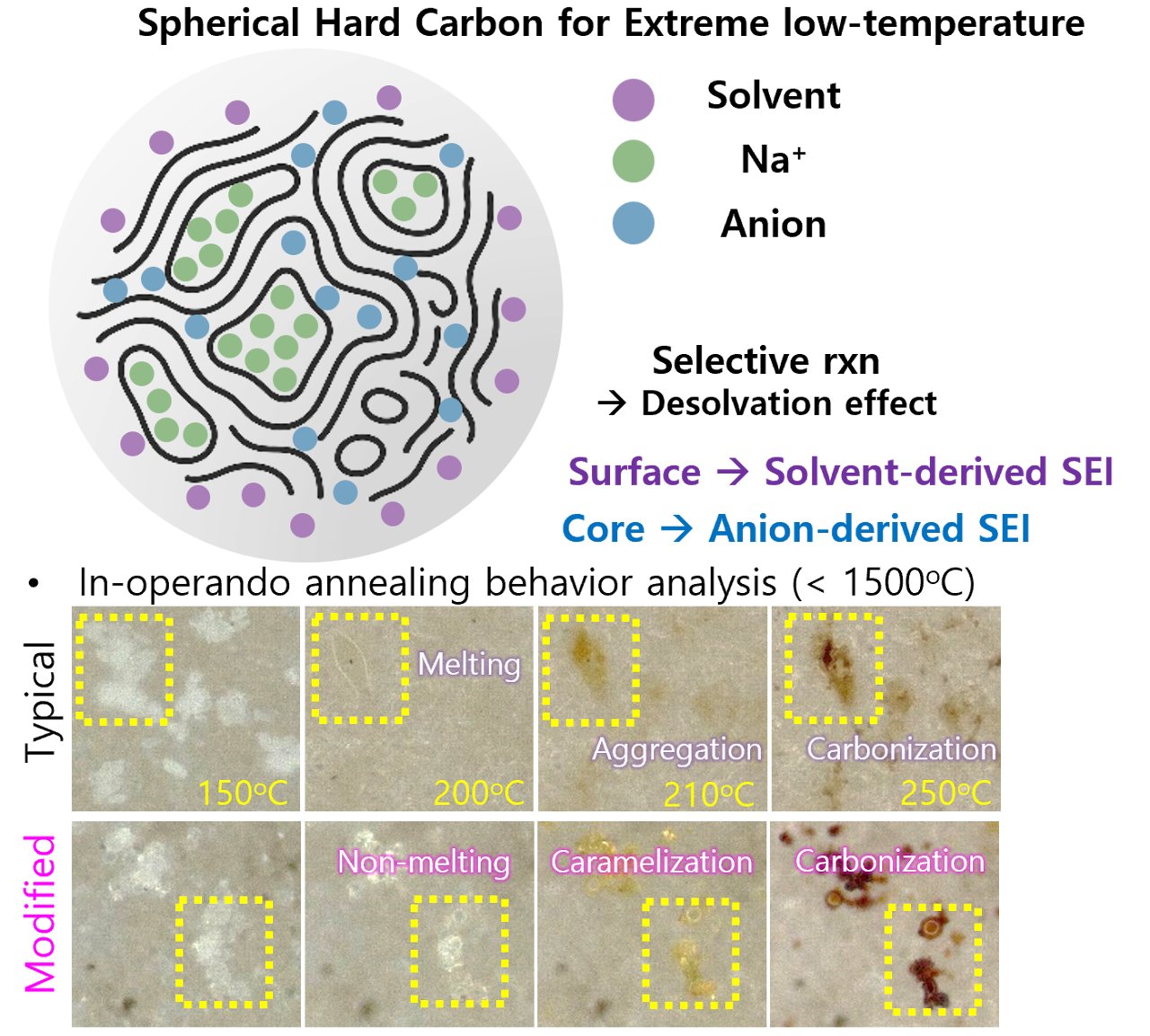
Spherical hard carbon for sodium-ion anodes: SEI structure and heating-stage micrographs of the synthesis
Spherical HC · surface (solvent-derived) vs. core (anion-derived) SEI · heated-stage synthesis구형 하드카본 · 표면(용매 유래) vs. 코어(음이온 유래) SEI · 가열 스테이지 합성 관찰
02 · Lithium-ion02 · 리튬이온전지

Si-based anodes실리콘계 음극

  • CVD-based Si/C composite anodesCVD 기반 Si/C 복합 음극
  • Electrode design for Si-containing anodesSi 함유 음극의 전극 설계

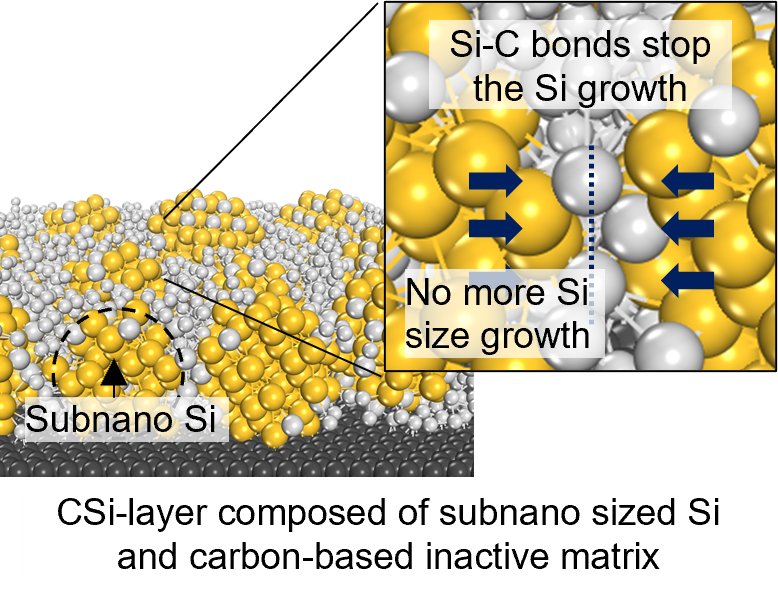
Silicon promises the biggest jump in energy density for lithium-ion cells, yet most laboratory innovations never survive densification and long-term cycling. Our sub-nano Si work — grown by chemical vapor deposition with crystal-growth inhibition — was demonstrated all the way to a prototype battery pack. We continue to map the failure mechanisms of Si and to design electrodes and cells that either maximise energy or maximise power.실리콘은 리튬이온전지 에너지밀도를 가장 크게 끌어올릴 소재지만, 대부분의 실험실 성과는 고밀도 압착과 장기 사이클을 견디지 못합니다. 결정 성장 억제 메커니즘을 이용한 CVD 기반 서브나노 Si 연구는 프로토타입 배터리 팩까지 실증했습니다. Si의 열화 메커니즘을 규명하고, 고에너지 또는 고출력에 맞춘 전극·셀 설계를 이어갑니다.

  • Scalable synthesis of advanced Si anodes by CVDCVD를 이용한 고성능 Si 음극의 대량 합성
  • Implementation in commercial cell formats상용 셀 규격에서의 구현
  • Failure-mechanism analysis of Si-based systemsSi계 시스템의 열화 메커니즘 분석
  • Electrode-level optimisation and high-energy / high-power cell design전극 최적화 및 고에너지·고출력 셀 설계
CVDSub-nano SiSi/graphiteFast charging
Sub-nano silicon in a carbon-based inactive matrix: Si–C bonds stop silicon size growth
CSi layer of sub-nano Si in a carbon matrix — Si–C bonds stop Si growth (Nature Energy 2021)탄소 매트릭스 속 서브나노 Si의 CSi 층 — Si–C 결합이 Si 성장을 억제 (Nature Energy 2021)
03 · Resources03 · 자원·원료

Raw materials for lithium-ion batteries리튬이온전지 원료 공정

  • Low-temperature Li extraction from hard-rock경암 광석에서의 저온 리튬 추출
  • Electro-mining of metallic Li from mineral광물에서 금속 리튬의 전기채광

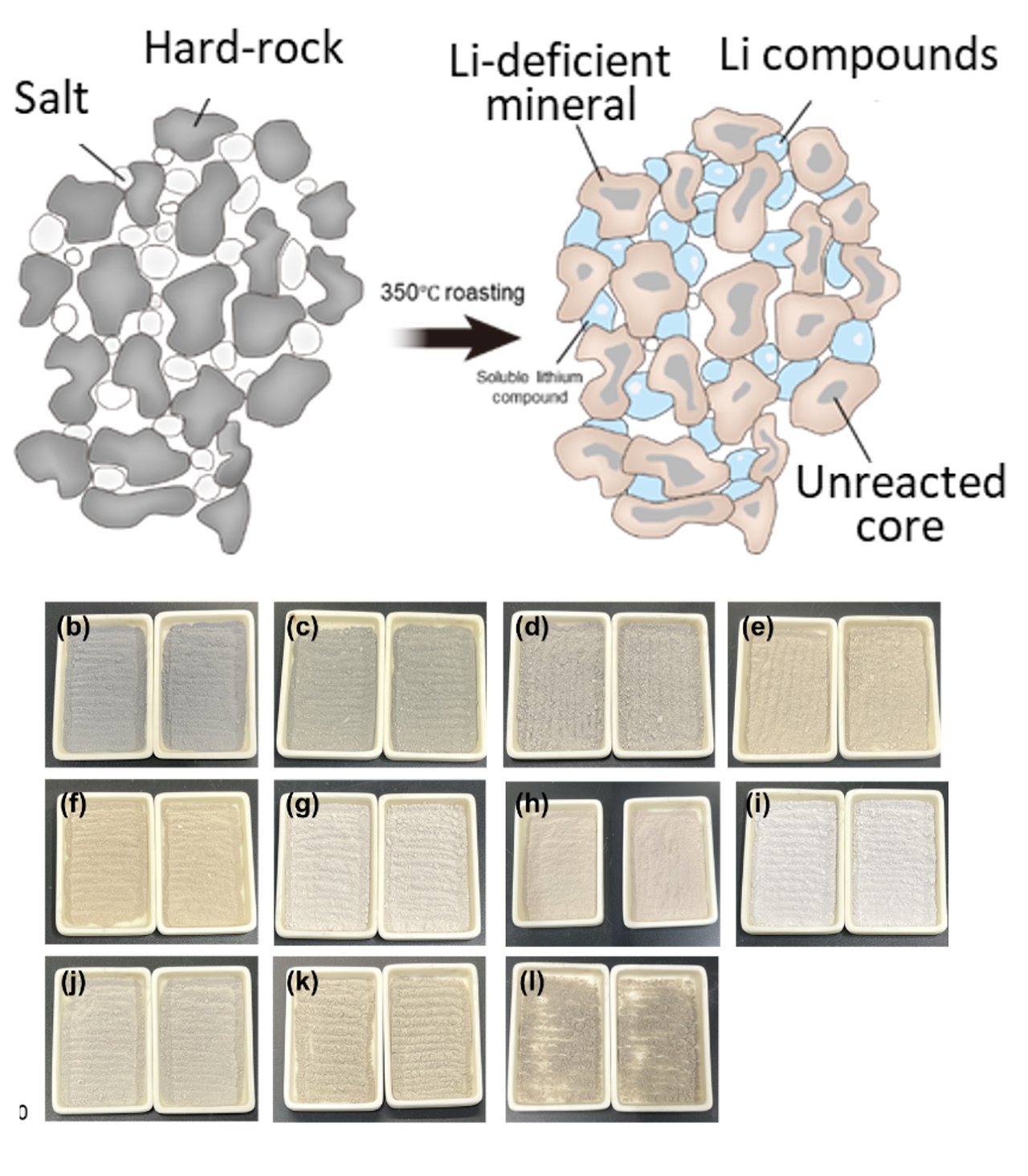
Conventional lithium refining roasts spodumene above 1000 °C, leaches it in acid and grinds it at every step. We are building a route that does none of that: a low-temperature, acid-free extraction that skips energy-intensive milling and mixing, and a continuous electro-mining process that turns lithium-bearing mineral directly into Li-metal anodes. This is the core of our NRF Outstanding Young Scientist project (2024–2029).기존 리튬 정제는 스포듀민을 1000 °C 이상에서 소성하고, 산으로 침출하고, 매 단계 분쇄합니다. 우리는 그 어느 것도 하지 않는 경로를 만들고 있습니다. 고에너지 분쇄·혼합을 생략하는 저온·무산 추출, 그리고 리튬 함유 광물을 곧바로 리튬금속 음극으로 바꾸는 연속 전기채광 공정입니다. 한국연구재단 우수신진연구 과제(2024–2029)의 핵심 주제입니다.

  • Low-temperature, acid-free extraction저온·무산 추출 공정
  • Scalable extraction without expensive milling or mixing고비용 분쇄·혼합 없는 확장 가능한 추출
  • Continuous electro-mining of Li-metal anodes from mineral sources광물 원료로부터 리튬금속 음극의 연속 전기채광
SpodumeneElectro-miningLi metalProcess
Lithium extraction from hard-rock: salt and mineral mixture before and after reaction, with electrode samples
Hard-rock + salt → reacted mineral · lithium recovered as electrodes경암 광석 + 염 → 반응 후 광물 · 전극 형태로 회수된 리튬
04 · Lithium-ion04 · 리튬이온전지

Ni-rich cathodes하이니켈 양극

  • Controlling residual-Li compounds잔류 리튬 화합물 제어
  • Tuning Li-site defect chemistryLi 자리 결함 화학의 조절

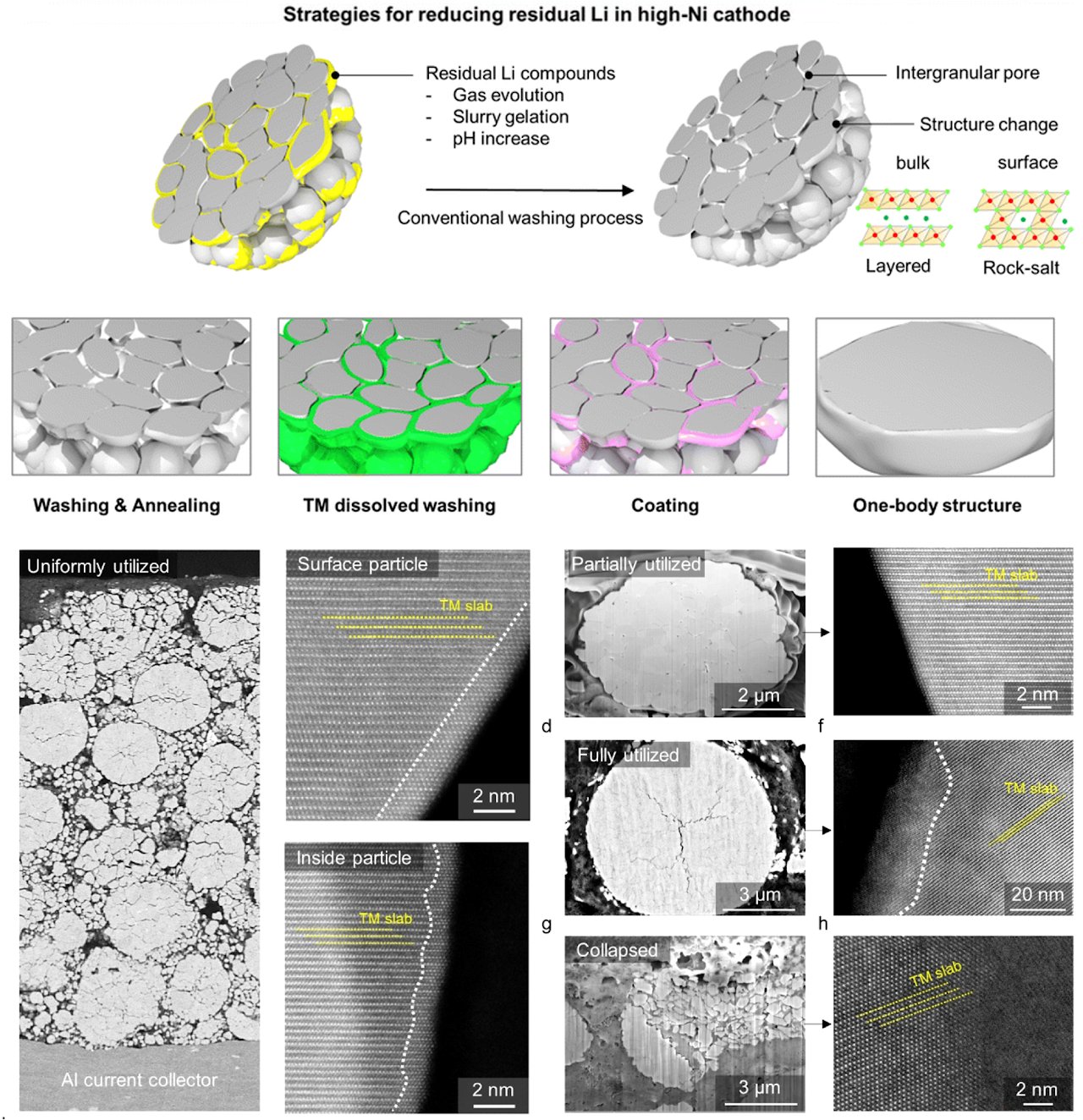
Residual lithium compounds on Ni-rich cathodes cause gas evolution, slurry gelation and pH drift, and the washing used to remove them damages the surface. We suppress their formation, remove them selectively to engineer the cathode–electrolyte interface, block Li⁺/H⁺ exchange, and watch the consequences directly with our in-operando gas-evolution analysis — for both liquid and all-solid-state cells.하이니켈 양극 표면의 잔류 리튬 화합물은 가스 발생, 슬러리 겔화, pH 상승을 일으키고, 이를 제거하는 수세 공정은 표면을 손상시킵니다. 잔류 리튬의 생성을 억제하고 선택적으로 제거해 양극–전해질 계면을 설계하며, Li⁺/H⁺ 교환을 막고, 그 결과를 자체 제작한 in-operando 가스 분석으로 직접 관찰합니다. 액체 전해질 셀과 전고체 셀 모두를 대상으로 합니다.

  • Suppressing residual-Li formation잔류 리튬 생성 억제
  • Interface control through selective compound removal선택적 제거를 통한 계면 제어
  • Preventing Li⁺/H⁺ exchangeLi⁺/H⁺ 교환 방지
  • In-operando gas-evolution analysisIn-operando 가스 발생 분석
NCM / NCAResidual LiWashingOperando gas
Strategies for reducing residual Li in high-Ni cathodes, with TEM images of the particle surface
Residual-Li strategies: washing & annealing, TM-dissolved washing, coating, one-body structure · TEM of surface layers잔류 리튬 저감 전략: 수세·열처리, 전이금속 용해 수세, 코팅, 일체형 구조 · 표면층 TEM
05 · Next generation05 · 차세대

Beyond the Li-ion battery리튬이온 그 다음의 전지 시스템

  • All-solid-state Li-metal batteries전고체 리튬금속전지
  • Long-life, high-energy Li-metal batteries장수명·고에너지 리튬금속전지

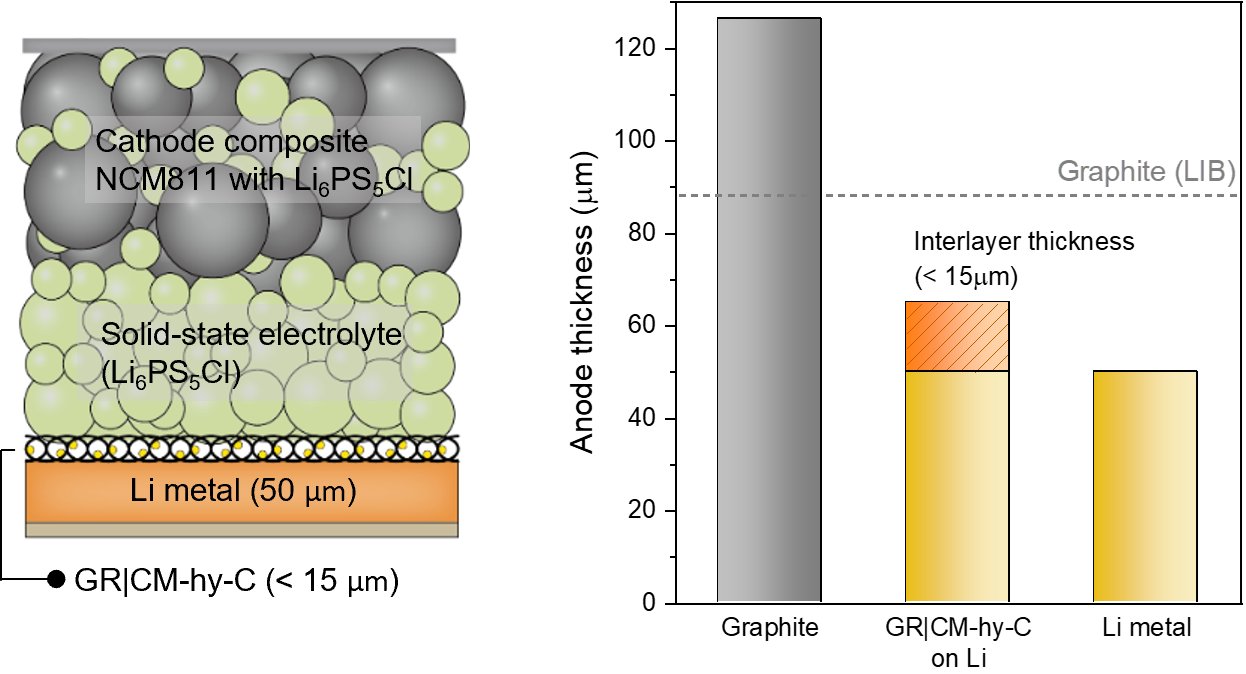
Lithium metal is the ultimate anode, if it can be hosted and interfaced properly. We showed that carbide-mediated catalytic hydrogenolysis creates defect-rich graphene hosts that work in both liquid and sulfide all-solid-state cells, and we design alloy anodes whose pulverisation is governed by electrolyte interfacial reactivity. The same toolkit — failure analysis, materials design, electrolyte design — is now aimed at lean- and Li-free electrodes and at high-energy sodium-ion systems.리튬금속은 제대로 담고(host) 계면을 설계할 수 있다면 궁극의 음극입니다. 카바이드 매개 촉매 수소분해로 만든 결함 그래핀 호스트가 액체 전해질과 황화물 전고체 셀 모두에서 작동함을 보였고, 전해질 계면 반응성이 분쇄를 지배하는 합금 음극을 설계합니다. 같은 도구—열화 분석, 소재 설계, 전해질 설계—를 Li-lean·Li-free 전극과 고에너지 소듐이온 시스템에도 적용합니다.

  • Failure analysis and materials design for advanced alloy anodes고성능 합금 음극의 열화 분석과 소재 설계
  • Electrolyte design for high-energy sodium-ion systems고에너지 소듐이온 시스템용 전해질 설계
  • Metallic-Li hosting materials금속 리튬 호스트 소재
  • Lean- or Li-free electrode strategiesLi-lean 또는 Li-free 전극 전략
Li metalSulfide ASSBAlloy anodesNa-ion electrolyte
All-solid-state cell stack: NCM811 cathode composite, Li6PS5Cl solid electrolyte and Li-metal anode, with capacity comparison
Sulfide all-solid-state stack: NCM811 composite / Li₆PS₅Cl / 50 µm Li metal황화물 전고체 스택: NCM811 복합 양극 / Li₆PS₅Cl / 50 µm 리튬금속
06 · Electrode processing06 · 전극 공정

High-energy dry-electrode processing고에너지 건식 전극 공정

  • Solvent-free PTFE-bound electrodes무용매 PTFE 바인더 전극
  • Carbon-anode interface design탄소계 음극 계면 설계

Dry (solvent-free) electrode processing removes the solvent, drying and recovery steps of slurry coating and allows thick, high-loading electrodes. Its PTFE binder, however, is reductively decomposed on carbon anodes at low potential, consuming lithium and degrading the electrode. We design the carbon-anode interface so that this decomposition is suppressed and the process can be used for high-energy cells.건식(무용매) 전극 공정은 습식 슬러리 코팅의 용매·건조·회수 단계를 없애고 두껍고 고로딩의 전극을 만들 수 있게 합니다. 그러나 바인더로 쓰이는 PTFE는 탄소계 음극의 낮은 전위에서 환원 분해되어 리튬을 소모하고 전극을 열화시킵니다. 이 환원 분해를 억제할 수 있는 탄소계 음극 계면을 설계해 고에너지 셀에 건식 공정을 적용합니다.

  • Carbon-anode interface design that suppresses reductive decomposition of PTFEPTFE 환원 분해 억제가 가능한 탄소계 음극 계면 설계
  • Thick, high-loading dry electrodes for high-energy cells고에너지 셀을 위한 두껍고 고로딩의 건식 전극
Dry electrodePTFE binderCarbon anodeInterface
Work with us함께 연구하기

Interested in one of these problems?이 중 흥미로운 주제가 있나요?

We collaborate with industry and academic partners in Korea and abroad, and we are always looking for students who want to own one of these questions.국내외 산업체·학계와 활발히 협력하고 있으며, 이 질문들 중 하나를 자기 것으로 삼을 학생을 언제나 기다립니다.